Carne Asada in Monterrey: How to Eat Meat Like a Local (and Grill Your Own)
Monterrey is Mexico's grilled-meat capital, and the way locals eat meat here is the carne asada: beef grilled over charcoal, eaten standing up in rounds with flour tortillas, grilled spring onions and very cold beer. You can order it in restaurants all over the city, but it is also one of the few truly local experiences a visitor can do on their own, with nothing more than a grill or a small kitchen and the right shopping list.
In Monterrey the carne asada is not a dish. It is a social format: Saturday evening, a patio, someone in charge of the grill who will not give up the post, and a meal that starts late and ends when it ends.
Here is the shopping list and the order of the table.
The meat: what to ask for
This is eighty percent of the decision.
Arrachera. The star cut, close to what US shoppers know as skirt steak. It is sold two ways: natural (plain) or marinada (marinated). Marinated comes ready to cook and is the easy route; plain is better if you want to season it yourself. For a visitor who wants no complications, marinated arrachera from a good butcher is exactly right.
Diezmillo. Chuck. Cheaper, more flavor, a little less tender. It is what many families use as the base, and it is the best ratio of price to result.
Costilla cargada. Beef short rib cut in thin strips. It takes longer on the fire and is worth it.
Chorizo or salchicha. Not an extra: it goes on first and is eaten standing while everything else cooks. It is part of the structure of the evening.
Mexican cut names do not map neatly onto US or European ones, and that is the number one source of confusion at the counter. Our guide to meat cuts in Monterrey and how to order them translates the names and tells you what to ask for. Read it before you walk into the butcher shop.
How much: local custom is generous. Count 300 to 400 grams per person, not including chorizo. For two people, a little under one kilo is plenty with some left over.
Where to buy it
The neighborhood butcher shop (carnicería) is the right answer. Better meat, and above all someone who will tell you what to take if you explain you are grilling and for how many. In a city where carne asada is an institution, the butcher knows exactly what you need.
How it works: you order by the kilo, name the cut and the thickness, and it is prepared on the spot. If you do not know what to choose, "para asar, para dos personas" (for grilling, for two people) is a sentence that settles the whole conversation.
Traditional markets are the other option, with the advantage that you can pick up vegetables, salsas and everything else in the same stop.
The supermarket works for the rest of the list, and its meat counter is acceptable if there is no butcher nearby. It is not the same, but it ruins nothing.
The rest of the table
Without these it is not a carne asada, it is just grilled meat:
- Flour tortillas. Not corn. This is not negotiable in northern Mexico, and fresh ones from a local tortilla shop are noticeably better than bagged.
- Cebollitas de cambray: whole spring onions, straight on the grill until golden.
- Chiles toreados: whole serrano or jalapeño peppers, blistered on the grill.
- Guacamole or avocado salsa. The thinner, taquería-style version is the one used here.
- Frijoles charros (cowboy beans) if you want the full package. They are sold ready-made in any supermarket.
- Limes. Many more than you think.
- Something cold to drink. Almost always beer. Very cold.
Optional but very local: queso asadero melted on the grill, and whole grilled nopales (cactus paddles).
The order
This is what separates a carne asada from a generic barbecue.
- Chorizo or sausage first. Eaten standing, in a tortilla, while the charcoal finishes settling. It is the social kickoff.
- Then the onions and chiles, which go to the edge of the fire and are forgotten for a while.
- Then the meat, in batches, not all at once. It is eaten as it comes off.
- Short rib last, if there is any, because it takes longest.
Nobody sits down to wait until everything is ready. You eat standing, in rounds, for a long hour. That is the point.
If you do not have a grill
It can be done indoors with a skillet or griddle, and it works better than it sounds. Marinated arrachera in a very hot pan, spring onions on the same surface afterwards, flour tortillas warmed right there. It is not the same, since there is no smoke, but the result on the plate is honest.
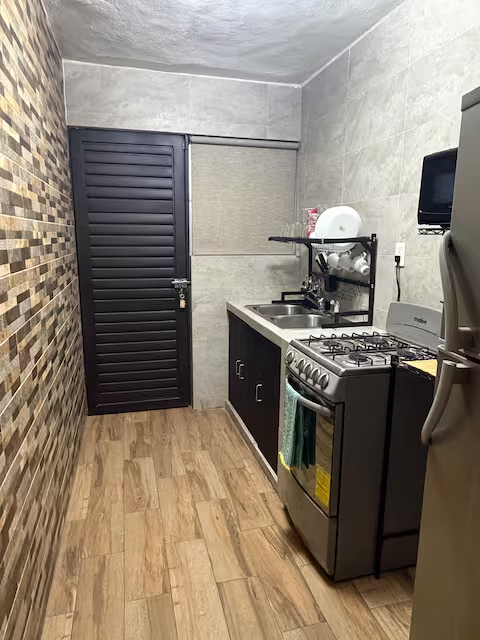
If your accommodation has a kitchenette, this is exactly the kind of meal that justifies it: it costs a fraction of what the same meat costs in a restaurant and is closer to how people actually eat in Monterrey. It is also one of the easiest ways to keep a trip affordable, as we explain in Monterrey on a budget.
If you would rather someone else cooked
Monterrey is full of steakhouses and neighborhood grill spots, and many sell grilled meat by the kilo to take away. For the restaurant route, and for the rest of the regional kitchen, see our guide on where and what to eat in Monterrey, which covers the city's other great meat dish too: slow-roasted kid goat, explained in detail in cabrito in Monterrey.
A note on timing
A Monterrey carne asada is an evening affair, not a lunch. Saturday from seven or eight o'clock is normal, and it stretches. If your plan was to eat at two in the afternoon, that is a different kind of meal, and also a valid one, but it is not this.
Buy the meat the same day, early. Good butcher shops are busiest on Saturday mornings and the best cuts go first.
A note on the weather
Grilling outdoors is far more pleasant from October to April than in the heat of summer, when even locals wait until after dark to light the charcoal. If you are choosing dates, Monterrey weather month by month shows what to expect.
In short
Arrachera or diezmillo from a neighborhood butcher, chorizo first, flour tortillas, grilled onions, cold beer, Saturday evening. Whether you grill it yourself or order it by the kilo, this is the meal that explains Monterrey.
Frequently asked questions
Arrachera (skirt steak) and diezmillo (chuck) are the base cuts, almost always joined by chorizo or sausage to start, and sometimes thin-cut beef short rib. Arrachera is sold either plain or marinated.
At neighborhood butcher shops, which usually have better meat than a supermarket counter, and at traditional markets. A large supermarket covers everything else on the table.
Local custom is generous, roughly 300 to 400 grams of meat per person before counting chorizo and sides. For two people, a little under one kilo is plenty.
Yes. Steakhouses and neighborhood grill spots serve it across the city, and many sell grilled meat by the kilo to take away.